
I’ve been writing stories since I was a tiny child making flip-books in crayon, not even old enough to write words. Writing has remained an integral part of my life, especially as I create fiction. Today, I’d like to talk about my process and how I create a (hopefully) memorable and quality story.
I’m writing this in 2025 at age 29. I expect I’ll revise it from time to time, but this is also a window into one period of my life. I hope that as I age, I will grow as a writer and learn even more.
Planning story structure
I was in my late teens or early 20s when I first noticed that many of the great stories I’d read followed a certain structure. I drafted an article about it, but never posted it. As I got older, I learned that I am not the first person to notice this, as other writers have described aspects of it too.
The golden structure
I have not heard anyone name this, so I will nickname it “the golden structure.” (You could also call it “Luna Rose’s formula,” but that makes it sound like I invented it, when I’m actually just observing it.)
Anyway, here’s how it works, along with examples:
- Beginning: A protagonist believes “the Lie,” a misconception that holds them back. This creates a key flaw.
- Charmed: Charlotte, who has memory issues, believes everything her daughters tell her. So her key flaw is trusting without question.
- The Cardigan Kids: Pauline thinks she must obey adults, even at personal cost. This creates the flaw of self-sacrificing obedience.
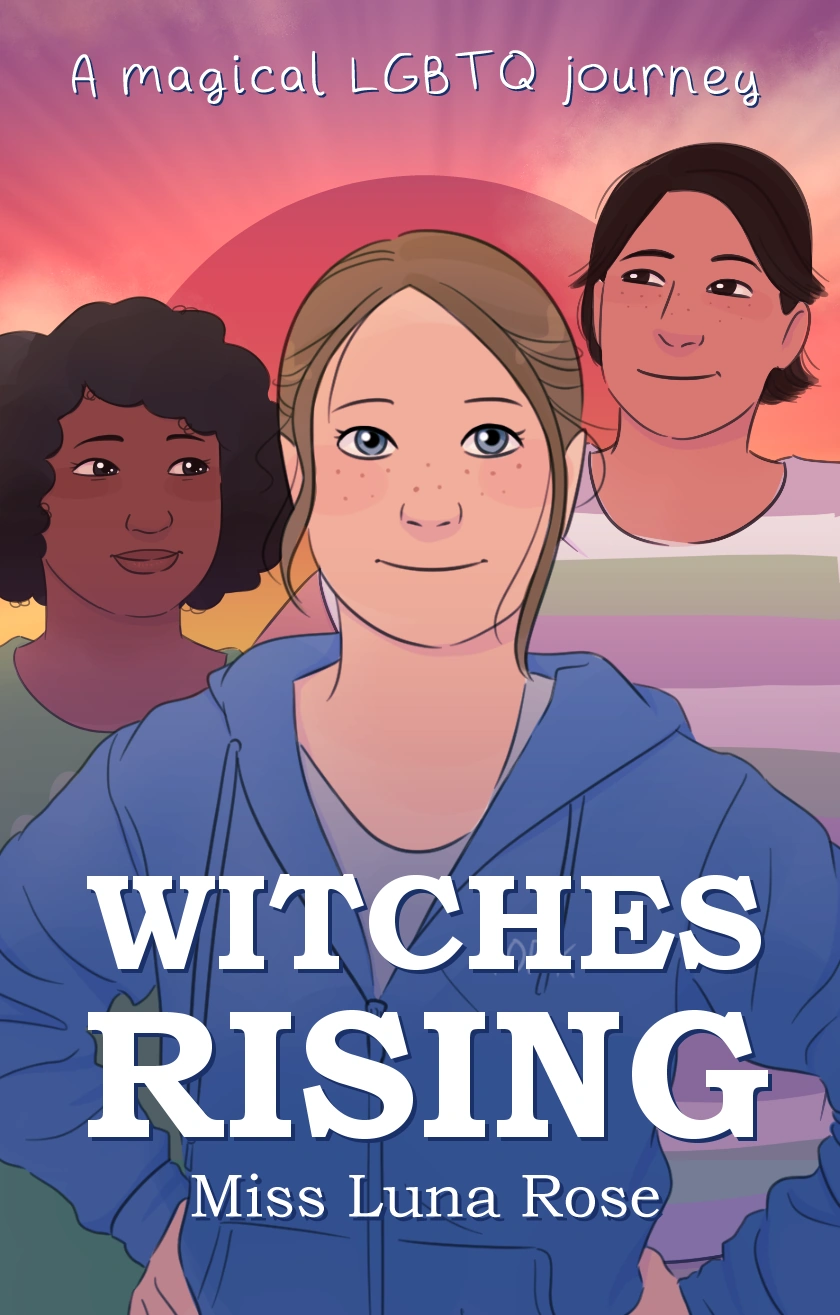
- Witches Rising: Valerie’s Lie is that what she does for other people defines her worth. This creates the flaw of excessive self-sacrifice.
- Rising action: Stakes raise. As the plot unfolds, the narrative challenges the value of the Lie.
- Charmed: We discover Charlotte’s daughters have convinced her to be housebound. Her nightmares suggest something important has been forgotten.
- The Cardigan Kids: Students forced to conform lose their happiness and individuality.
- Witches Rising: Valerie, her mom, and her grandma have all sacrificed their happiness for others, causing them to miss out on things and live smaller lives. We see how Valerie repeatedly ignoring her own needs has caused her to struggle.
- Climax: The protagonist confronts the Lie at (or sometimes just before?) the climax. They must choose between the Lie and something valuable.
- Charmed: Charlotte talks with one of her daughters. She can either question or accept the current narrative.
- The Cardigan Kids: Pauline must either stand up for herself or lose her identity.
- Witches Rising: Telling you this one would be too spoiler-y, but there’s a big choice here too.
- Ending: The protagonist’s ability or failure to reject the Lie and overcome their key flaw determines the ending of the story.
- You’ll have to read the stories if you want to know how they end.
Golden structure details
The Lie often stems from what writers call the Ghost. The Ghost is one or more upsetting past events that still haunt a character. Faced with danger, sadness, or other problems, the character developed the Lie to protect themselves. (My longer works may include a Ghost. Pauline’s story is too short for one. Valerie’s Ghost is the death of her dad and the pressure to step up for her family.)
The Lie is high-stakes, at least in the character’s mind. Sacrificing the Lie means opening themselves up to something scary, something that deeply challenges their identity or sense of safety. It can trigger strong emotions and irrational behavior.
While the golden structure focuses on the protagonist’s character arc, other characters can have their own fears, Lies, and opportunities for growth too.
An antagonist, if one exists, tends to be the Lie’s biggest advocate. The protagonist must question the lie to succeed, while the antagonist tries to push them into it. In this way, an antagonist serves as a foil, even a warped version of who the protagonist could become if they don’t give up the Lie.
Considerations
Not all great stories follow this structure, and not all stories that follow it are great. But it can help you create something compelling and meaningful.
I totally encourage budding writers to try this and see what they can do with it. It helps me tell better stories. And fellow readers, see if you can identify these in the stories you enjoy.
Building from the golden structure
Many of my story ideas come from dreams, which I call “story dreams,” that offer me the premise. Usually, the climax is involved, and sometimes (e.g. in “The Cardigan Kids”) the climax is all the dream gives me.
So I typically work backwards from there. I ask myself what choice the protagonist needs to make at the climax. (For example, Pauline must choose between obedience and staying true to herself.) What lesson must they learn in order to make the right choice? What Lie must they reject?
Then I design a protagonist who will find this choice difficult. They’ve lived by the Lie. If Valerie must choose happiness, then she must have sacrificed it before. If Pauline needs to stand up for herself at the climax, then this needs to be hard for her, or it wouldn’t be an interesting story.

If the story includes a villain, I design them to challenge the protagonist. They try to push the protagonist deeper into the Lie. So Mrs. Bee tells Pauline to conform. So Angel Rainnen tells Claire Fields that she must believe his autistics-as-worthless narrative.
This type of storytelling drives the plot. It creates a clear conflict and direction. And if I can pull it off well, I hope readers won’t soon forget it.
Of course, not all my stories follow the golden structure. I didn’t do this as a kid. My stalled novella “Thousand Dollar Friend” sits in Wattpad without updates partially because I didn’t plan by this formula and now I don’t know that well where the story is going. My “Cherry Bloom” WIP is also running into trouble as I figure out how to weave the Lie into parts 2 and 3. And it’s hard to create a path when your destination or the route is murky.
Fingers on the keyboard
If I know my story structure well, sometimes I can write quickly. I drafted “The Cardigan Kids” in a single day and the first “Witches Rising” draft didn’t take long either. But other times, I get stuck in the middle as I try to figure out how to build plot progression and detail. I hear many writers struggle with the middle sometimes.
I like to layer in hints and implications. I don’t expect every reader to notice each one, but I hope everyone notices some of them. I can’t always tell if I’m striking the right balance of subtlety and clarity. I’d like my stories to be of the quality that you could read them more than once and still enjoy it, perhaps recognizing things you didn’t catch on the first pass.
A long editing process is typical for me, including breaks spanning months. I value quality writing, which makes me worry if it’s good enough (character fear), leading to perfectionism (key flaw), causing me to sit on stories just in case I later think of something that could make them even better. But also, I want to make the world a better place through my writing, and it’s hard to do that if I never show it to anyone besides my family.
Luna Rose-isms
If you’ve read enough of my work, you’ll start to notice the hallmarks.

- Sapphic ladies. In most of my stories, girls/women will kiss or be married or at least hold hands. This was actually how I figured out I’m gay: my dad pointing out that I keep writing stories about girls dating girls. And, oh, that must mean something.
- Autism & neurodiversity. I tend to write characters who make sense to me, and since I’m autistic, autism makes sense. And I hope my work can promote autism acceptance and fight stigma. I also often write characters with intellectual disability, which my sister has, since these people deserve acceptance too.
- I used to worry readers would complain about all the autistic characters, but then I realized we don’t challenge white non-autistic men for constantly writing white non-autistic male stories, so who says I can’t keep making autistic stories?
- Optimism, though I’m branching out more too. I love happy endings. I want to help people feel good about themselves, the world, and their place in it. Though I’ve also tried some tragedies and scary stories in recent years.
- As of the time I’m posting this, I’m sitting on a few scarier stories. People usually expect Luna Rose works to be more tame, but perhaps you all can handle the PG-13.
- First person, present tense. This feels more immersive to me, so I often use one or both. I want readers to really get inside the protagonist’s head and relate to them.
- Little autobiographical details. Most of my readers may not know this, though my number one editor (Dad) does. Things on my mind work their way into my writing. And I like it this way. It makes reading my past work a little like looking at an old photo album and seeing traces of who I was at the time.
- Daniela is a project manager in “Witches Rising” as a subtle way to honor the awesome PMs at the job I held at the time.
- Pauline wears flower crowns because I got some really cute ones I like wearing.
- You’ll never guess why so many of my characters love cats.
- Illustrations. Art by MissLunaRose is a classic trait of stories by MissLunaRose. I love to draw what I imagine.
If you read enough of my work, you will know me deeply. Almost like a metaphorical friend. (I’m actually terrible at maintaining friendships in real life; I live mostly in my head.)
Growing as a writer
I’ve made incredible strides as a writer since I started posting on the internet ~15 years ago. How? Mostly practice. I write so many things. And I hope to keep doing more of it.
How I’ve changed

As an undiagnosed teen, I tended to use perfect grammar and long words. I thought it would be educational to readers, and after all, who doesn’t love learning new things? (Turns out I am a nerd.) Anyway, I don’t do that as an adult.
Sometimes a little sentence fragment or polysyndeton has a better impact. Grammar can be bent if it feels right in the story.
Too many long words can frustrate and shut out readers who don’t share my vocab size. As I’ve become more involved with the disability community, I’ve considered that some of my readers may have below-average intelligence or mild intellectual disability. And you know what? I’d love for them to enjoy my work too! It’s for all of you!
As an autistic writer, long words come naturally to my brain. I don’t try to censor myself too much, but I also use simpler words more often than I did before.
Continuing to change
As of summer 2025, I’ve taken a renewed interest in the literary devices I remembered studying in AP English classes. Remembering their names and holding them in my mind might help me write higher-quality work.
I’m also researching and writing articles about writing for The Authors Wiki because the boss of me, ADHD, demands it. A general side effect of doing research is getting smarter. So I may improve as a writer. Exciting! I wonder what I’ll learn next.
I’ve also noticed that while I can do hints and big-picture planning, my prose itself is fairly simple. Maybe I should work on wording and richness? A higher level of artistry at the phrase and word level could perhaps benefit my work.
I want to explore new techniques and areas, but I don’t know what I’ll discover yet. That’s generally how discovery works. But I want to keep learning stuff and practicing.
More Writing

I’ve been busy churning out fiction drafts this summer, and I hope to keep doing so. I want more story dreams, more ideas, and most importantly, an end to the writer’s block that’s holding back some of my longer works. Because I’ve got some big ones coming if I can only get them across the finish line.
Writing fiction is one of the activities that brings my life meaning. As a significantly disabled autistic person, I can’t really live a “normal life” or work full-time. But if I can write good stories, I can make the world a better place. I can leave it better off than it was when I started. Even in little ways.
I hope to tell stories that connect with people, especially if I can empower and encourage them to be their best selves. I hope my work will keep coming to inspire you, support you, and help you know that you’re not alone.

 Autistic Dreams